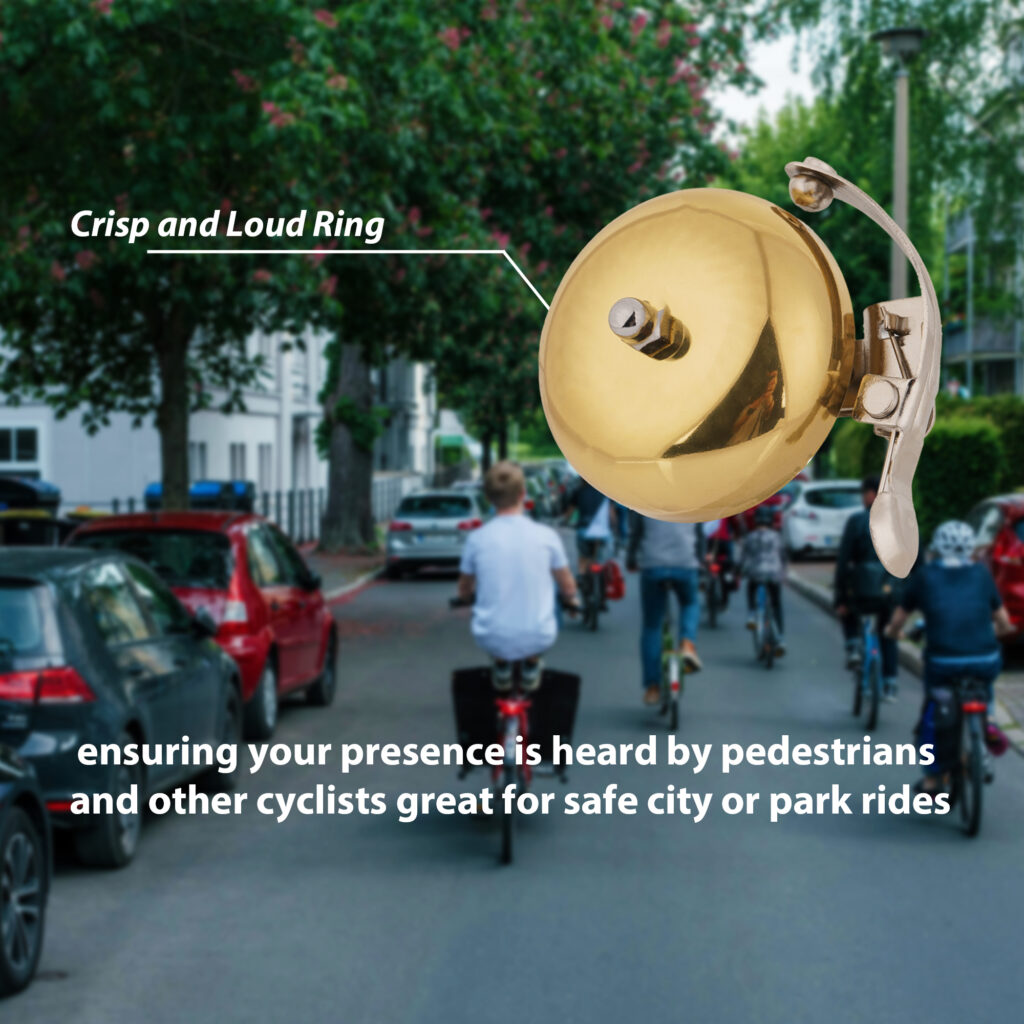
Every cyclist, whether navigating dense city traffic or cruising on a quiet suburban path, faces the same challenge: being heard before it’s too late. Visual signals are often missed by distracted drivers or pedestrians, making an audible warning system a critical component of bicycle safety. While electronic horns and high-tech gadgets have flooded the market, the classic mechanical ring remains a staple for its reliability and universally recognized sound.
In this evaluation, we look at the RidingRush Bike Ring Bell, a classic metal option designed for both adult commuters and younger riders. We will analyze its sound profile, build quality, and installation versatility to determine if it earns a spot on your handlebars.
The Case for a Classic Metal Bell
In an era of rechargeable accessories, the mechanical bike bell offers a distinct advantage: simplicity. There are no batteries to charge and no complex circuits to fail in the rain. The primary function of a bell like the RidingRush is to produce a sharp, resonant tone that cuts through ambient noise without being aggressively hostile.

For urban commuters and parents outfitting their children’s bikes, the goal is finding a balance between volume and tone. A bell that is too quiet is useless against traffic noise, while one that is too jarring can startle pedestrians rather than alert them. If you are currently looking to upgrade your safety setup, you can check the full specifications and fitment details at https://www.amazon.com/dp/B0FH8ZFRHZ to see if this specific model matches your handlebar diameter.
Build Quality and Material Analysis
The RidingRush bell utilizes a classic metal dome construction. Unlike plastic bells which produce a dull “thud” that dissipates quickly, metal domes are designed to sustain a ring. This sustain is crucial because it allows the sound to carry further, giving pedestrians more time to react.
Durability Factors
The internal striker mechanism appears to be spring-loaded, a standard design for this category. The advantage here is consistency; the striker hits the metal dome with the same force every time, ensuring a predictable volume. However, metal bells do require occasional maintenance. Over time, moisture can affect the pivot points of the striker, so a drop of lubricant once a season is usually recommended to keep the action smooth.
The gold finish offers a retro aesthetic that pairs well with vintage road bikes, cruiser bikes, and even modern city commuters looking for a touch of style. While aesthetics are subjective, the visibility of a gold object on the handlebars can also serve as a minor visual cue to others.
Installation and Universal Compatibility
One of the most frequent friction points with bicycle accessories is compatibility. Handlebars come in various diameters, from the slim bars found on vintage bikes and kids’ scooters (often 22.2mm) to the thicker clamp areas of modern road and mountain bikes (31.8mm).

The RidingRush unit addresses this with a mounting range of 0.87 to 1.25 inches (22.2mm to 31.8mm). This range covers the vast majority of bicycles on the market.
* Mountain Bikes: Typically fit near the grips or brake levers.
* Road Bikes: Can be mounted on the tops of the drop bars.
* Scooters & Kids’ Bikes: The smaller diameter range ensures it won’t slide around on thinner bars.
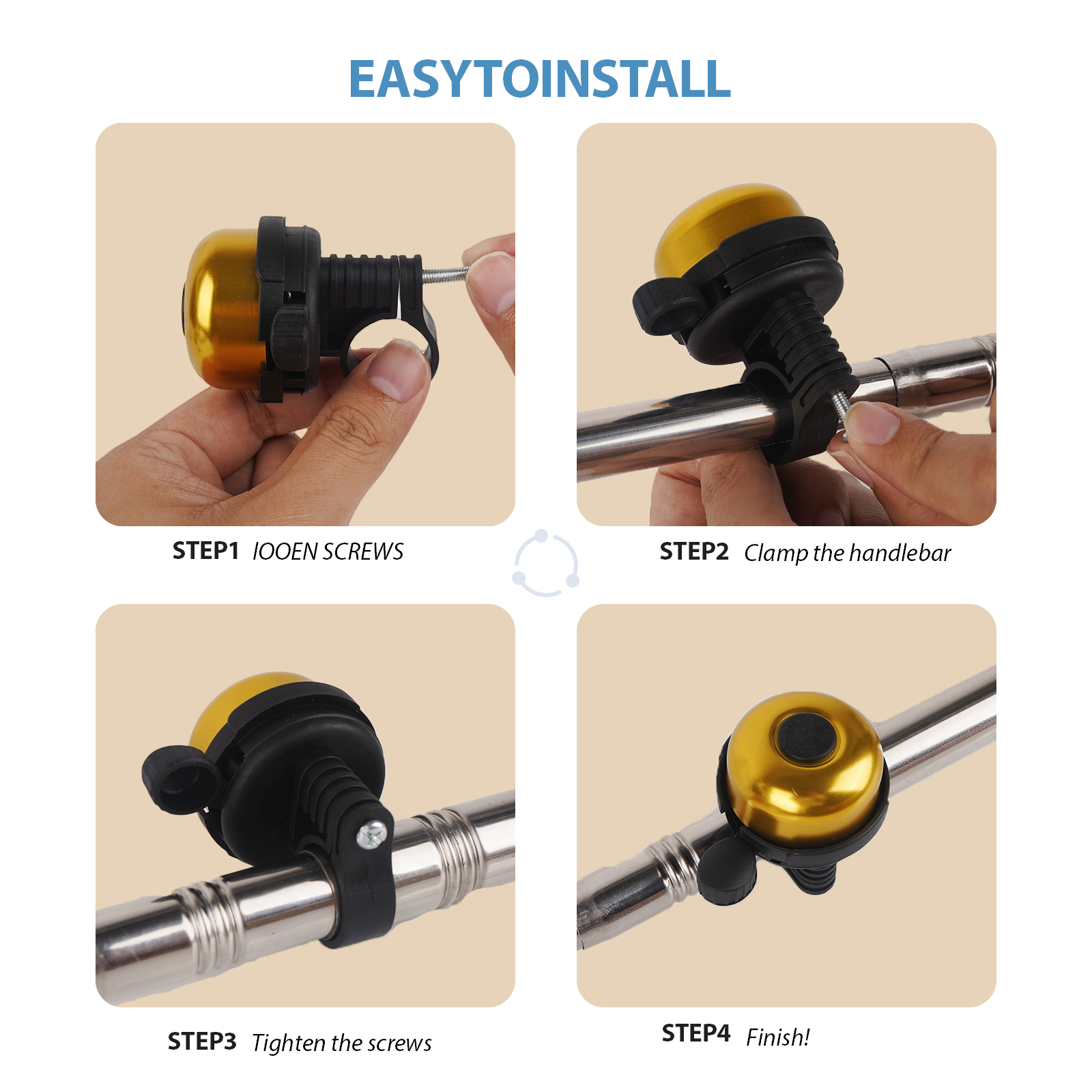
The installation process is generally tool-minimal, though ensuring a tight fit often requires a screwdriver to secure the clamp firmly. A loose bell is not only annoying due to rattling but can also fail to ring properly if the dome vibrates against the handlebars.
Sound Profile: Pitch and Volume
The “loud clear sound” described in the product specifications refers to the high-pitch frequency characteristic of small metal bells. High frequencies are directional and tend to cut through the low-frequency rumble of car engines and tire noise effectively.
The “Polite” Warning
Unlike air horns, which can sound aggressive, a classic ring is universally understood as a “bike approaching” signal. This makes it ideal for:
1. Shared Multi-Use Paths: Alerting joggers or walkers without causing panic.
2. Overtaking Cyclists: A quick “ding” signals your intent to pass on the left.
3. Neighborhood Riding: Ensuring children are heard by reversing cars or neighbors.
However, it is important to note the limitations. In heavy, high-speed automotive traffic, no mechanical bell will be as effective as a loud electronic horn. The RidingRush is best utilized for pedestrian interaction and low-to-medium speed traffic environments.
Buying Considerations: Who is this for?
Before purchasing, it is vital to assess your specific riding environment and equipment.
The Ideal User
* Commuters: Who ride on mixed-use paths and need to politely alert pedestrians.
* Parents: Looking for a durable, easy-to-use safety device for a child’s bike or scooter.
* Casual Riders: Who want a reliable, battery-free solution that adds a classic look to their bike.
Potential Trade-offs
* Aero Bars: If you ride a specialized triathlon or time-trial bike with non-round or aero-shaped bars, standard clamps like this may not fit securely.
* Heavy Winter Gloves: The striker lever is relatively compact. Riders wearing thick winter mittens might find it slightly harder to trigger compared to a trigger-style bell, though it is generally manageable.
* Stealth Aesthetics: The gold finish is distinct. If your bike has a strictly matte black “stealth” look, this will stand out.
Comparison to Market Alternatives
When evaluating the RidingRush against competitors, two main categories emerge:
1. Plastic “Pinger” Bells: Often found on budget bikes, these use a plastic internal gear or striker. They are quieter and less durable than the metal construction of the RidingRush. They tend to break after a few months of heavy use or UV exposure.
2. Electronic Horns: These are significantly louder (often 100dB+) but require batteries and can be obnoxious on quiet trails. The RidingRush offers a passive, maintenance-free alternative that is friendlier for community riding.
Verdict on Long-Term Value
Safety accessories are an investment in peace of mind. The RidingRush Bike Ring Bell provides a functional upgrade over standard plastic bells included with many bicycles. Its metal construction ensures a clearer tone and better longevity, while the adjustable clamp offers versatility across different bike types in your garage.
For those seeking a reliable, battery-free way to signal their presence on the road or trail, this classic design remains one of the most practical solutions available. You can view current availability and further user reviews at https://www.amazon.com/dp/B0FH8ZFRHZ to decide if it suits your specific bike setup.
Frequently Asked Questions
Will this bell fit on a child’s scooter?
Yes, the clamp is designed to tighten down to 22.2mm (0.87 inches), which is the standard diameter for most kick scooters and children’s bike handlebars.
Is the bell waterproof?
The bell is mechanical and made of metal, so it is water-resistant and will function in the rain. However, like all metal bike parts, it is good practice to wipe it dry after heavy rain to prevent long-term surface corrosion on the screws or springs.
Do I need special tools to install it?
Installation typically requires a standard screwdriver to tighten the mounting bracket. No complex proprietary tools are needed.
Can this be mounted on road bike drop bars?
Yes, provided the section of the bar where you mount it falls within the 22.2mm to 31.8mm range. Most road bike handlebars are 31.8mm at the stem clamp and taper down, allowing for flexible placement.
How loud is the bell compared to an electronic horn?
It is significantly quieter than an electronic horn. It is designed for signaling pedestrians and other cyclists on shared paths, rather than alerting cars at highway speeds. It produces a sharp, clear ring rather than a continuous siren.