Enhancing Sidewalk Safety: A Review of the RidingRush American Flag Bike Bell
For parents and guardians, equipping a child’s bicycle involves a delicate balance between safety requirements and the rider’s desire for personal expression. While helmets and knee pads are non-negotiable safety standards, accessories like bicycle bells often fall into a discretionary category. However, on shared paths, busy sidewalks, and neighborhood streets, an audible signal is a critical component of defensive riding.
The challenge often lies in finding a safety accessory that a child actually wants to keep on their handlebars. Generic black bells are functional but uninspiring, while novelty horns often lack the durability required for daily play. The RidingRush Kids Bike Bell attempts to bridge this gap by combining a patriotic American flag aesthetic with a traditional, high-resonance metal dome construction. This review evaluates the bell’s build quality, acoustic performance, and suitability for various types of youth cycles.
The Role of Auditory Safety in Youth Cycling
Before analyzing the specific hardware, it is important to understand the functional necessity of a bike bell. Young riders, particularly those on balance bikes or training wheels, are still developing their spatial awareness. They often do not look behind them before turning and may struggle to vocalize “on your left” when passing pedestrians.
A mechanical bell serves as a consistent, recognizable auditory cue. It allows the child to alert others of their presence without removing their hands from the handlebars to wave or shout. For a bell to be effective, it must be easy to trigger with a small thumb and loud enough to cut through ambient neighborhood noise.

Design and Build Quality
The RidingRush bell moves away from the entirely plastic construction found in many entry-level bicycle accessories. Instead, it utilizes a metal dome seated on a sturdy plastic base. This material choice is significant for two reasons: durability and sound resonance.
Metal vs. Plastic Domes
Plastic bells often produce a dull “thud” sound that dissipates quickly. In contrast, the metal dome on this unit is designed to ring with a sharp, clear pitch. From a longevity standpoint, metal is more resistant to the inevitable drops and scrapes that occur when a child’s bike is left on the driveway or tipped over at the park. While the paint may scratch over time, the structural integrity of the dome typically outlasts plastic alternatives that are prone to cracking under impact.
Aesthetic Appeal
The visual design features a wrap-around American flag pattern. For many young riders, the “cool factor” of their bike is determined by these small customizations. This specific design pairs well with standard red, white, or blue bicycle frames, as well as neutral black or silver BMX bikes. It also serves as a popular accessory for holiday parades or summer riding events.
Acoustic Performance: Loud and Clear
The primary metric for any bike bell is its sound profile. A bell that cannot be heard by a pedestrian walking a dog 20 feet away is functionally useless.
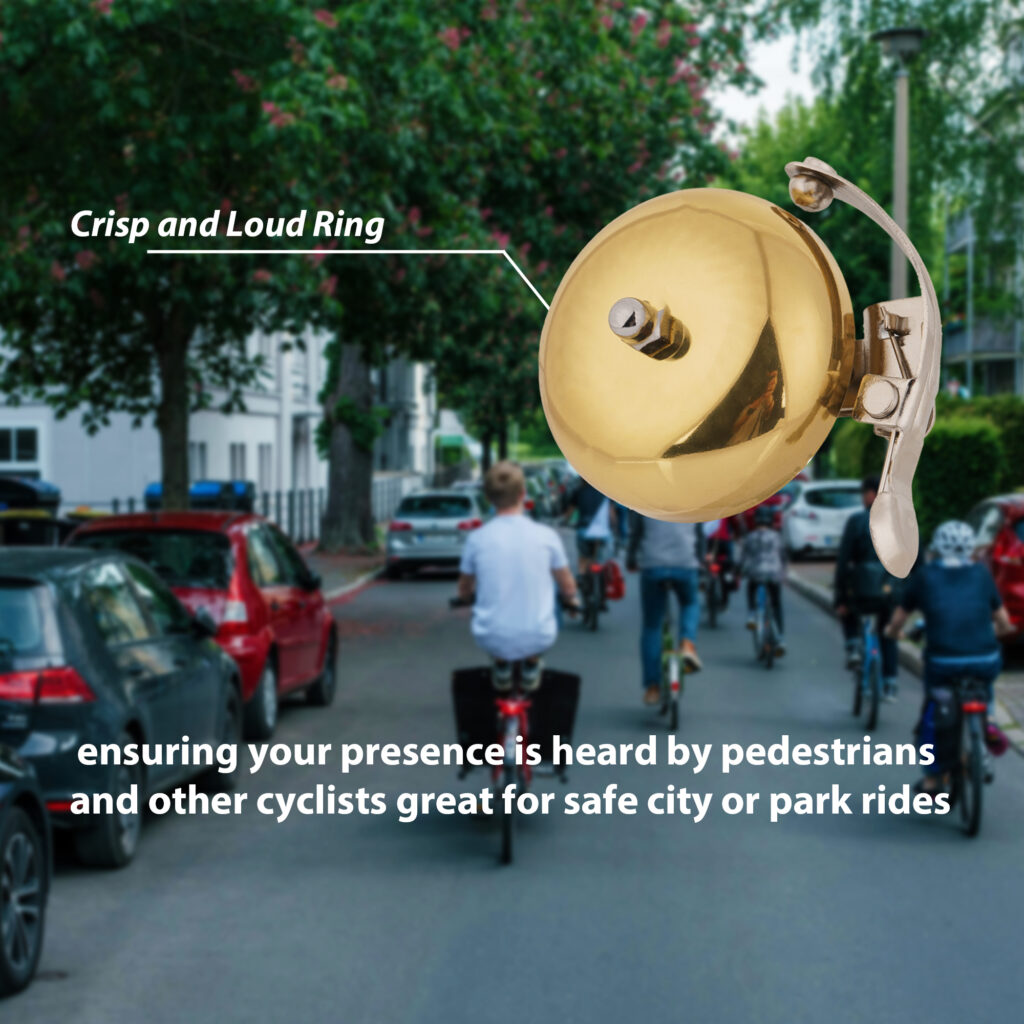
The RidingRush bell utilizes a spring-loaded internal striker mechanism. When the lever is flicked, the striker hits the metal dome, creating a crisp “ding.” This sound is distinct from traffic noise or conversation, making it effective for alerting pedestrians.
Ease of Use for Toddlers
The trigger mechanism is designed with resistance appropriate for children. It requires enough force to prevent accidental ringing when going over bumps, but it is light enough for a toddler’s thumb to operate. This accessibility is vital for riders on balance bikes who are just learning hand-eye coordination.

Installation and Compatibility
One of the most common frustrations with bike accessories is the fit. Handlebars vary in thickness depending on the bike style (BMX vs. Cruiser vs. Mountain).
Technical Specifications
This bell is engineered to fit handlebars with a diameter between 22 mm and 25 mm. This range covers the vast majority of standard youth bicycles, including:
* BMX Bikes: Standard crossbars usually fall within this range.
* Cruiser Bikes: The swept-back bars generally accommodate this clamp size.
* Balance Bikes: Most high-quality balance bikes use standard diameter tubing.
* Scooters: Many kick scooters also utilize 22mm bars, making this a crossover accessory.
Mounting Mechanism
Unlike bells that use rubber bands or zip ties—which can rot or slip over time—this unit uses a screw-tightened clamp. This ensures that once the bell is positioned, it does not rotate downward or rattle loose during a ride. Installation requires a standard screwdriver and typically takes only a few minutes. Parents should measure the handlebar diameter prior to installation to ensure a secure fit, particularly on very thin handlebars found on some budget tricycles.

Real-World Utility and Limitations
While the RidingRush bell is a robust option for most young riders, it is important to view it through a realistic lens regarding its capabilities and limitations.
Pros:
* Audio Clarity: The metal dome provides a sustain and volume superior to plastic clickers.
* Secure Fit: The screw-clamp mount prevents the bell from drooping, ensuring the trigger is always in reach.
* Universal Styling: The patriotic design is gender-neutral and fits a wide variety of bike color schemes.
* Durability: Withstands weather exposure and minor impacts better than electronic horns or soft rubber squeakers.
Cons:
* Sizing Constraints: It is strictly designed for 22–25 mm bars. It will not fit the oversized 31.8 mm clamp areas found on the center of some adult mountain bikes or very thin vintage tricycle bars without shims.
* Manual Operation: Unlike electronic horns, it requires manual dexterity. Very young children (under 2) may find pushing the lever while steering to be a complex task initially.
Comparison to Market Alternatives
When browsing for bike bells, buyers typically encounter three categories:
1. Rubber Squeak Horns: These are fun and loud but often bulky and can be harder for small hands to squeeze quickly in an emergency. They also tend to degrade in sunlight.
2. Electronic Horns: These offer various sounds but require batteries and are susceptible to water damage if left in the rain.
3. Classic Mechanical Bells (Like RidingRush): These offer the best balance of durability and maintenance-free operation. They do not require batteries and are generally weather-resistant.
For parents prioritizing low maintenance and reliability, the mechanical route is often the most practical choice. The metal construction ensures that the device remains functional even after a season of being left out in the yard.
Conclusion
Safety accessories for children are most effective when they are actually used. By combining a functional, loud safety signal with a design that appeals to young riders, the RidingRush bell serves as a practical upgrade to any youth bicycle. It moves beyond being a mere toy and functions as a legitimate tool for sidewalk etiquette and rider safety.
Ensuring your young rider can signal their presence effectively is a key step in cycling independence, and the RidingRush Bell provides that capability with a durable metal construction and easy-to-operate design.
Frequently Asked Questions
Q: Will this bell fit on a razor-style scooter?
A: It depends on the handlebar diameter. If the scooter’s handle tube is between 22 mm and 25 mm (which is standard for many pro scooters and larger kick scooters), it will fit. It may be too loose on very thin, adjustable T-bars found on micro-scooters without adding rubber shims.
Q: Is the bell weather-resistant?
A: Yes, the metal dome and plastic base are designed for outdoor use. However, like all metal bike parts, prolonged exposure to heavy rain without drying could eventually lead to surface oxidation on screws, so storing the bike indoors is recommended for maximum longevity.
Q: Can a 3-year-old operate this bell?
A: Generally, yes. The spring-loaded lever is designed to be operated by a thumb. Most toddlers capable of riding a balance bike have the motor skills required to flick the lever.
Q: Do I need special tools to install it?
A: No special tools are required. You will typically need a standard Phillips head screwdriver to tighten the mounting bracket screw.
Q: Is the sound loud enough for traffic?
A: The bell is designed for sidewalk and park safety (alerting pedestrians and other cyclists). While it is sharp and clear, no standard bicycle bell is intended to compete with the noise of heavy car traffic.