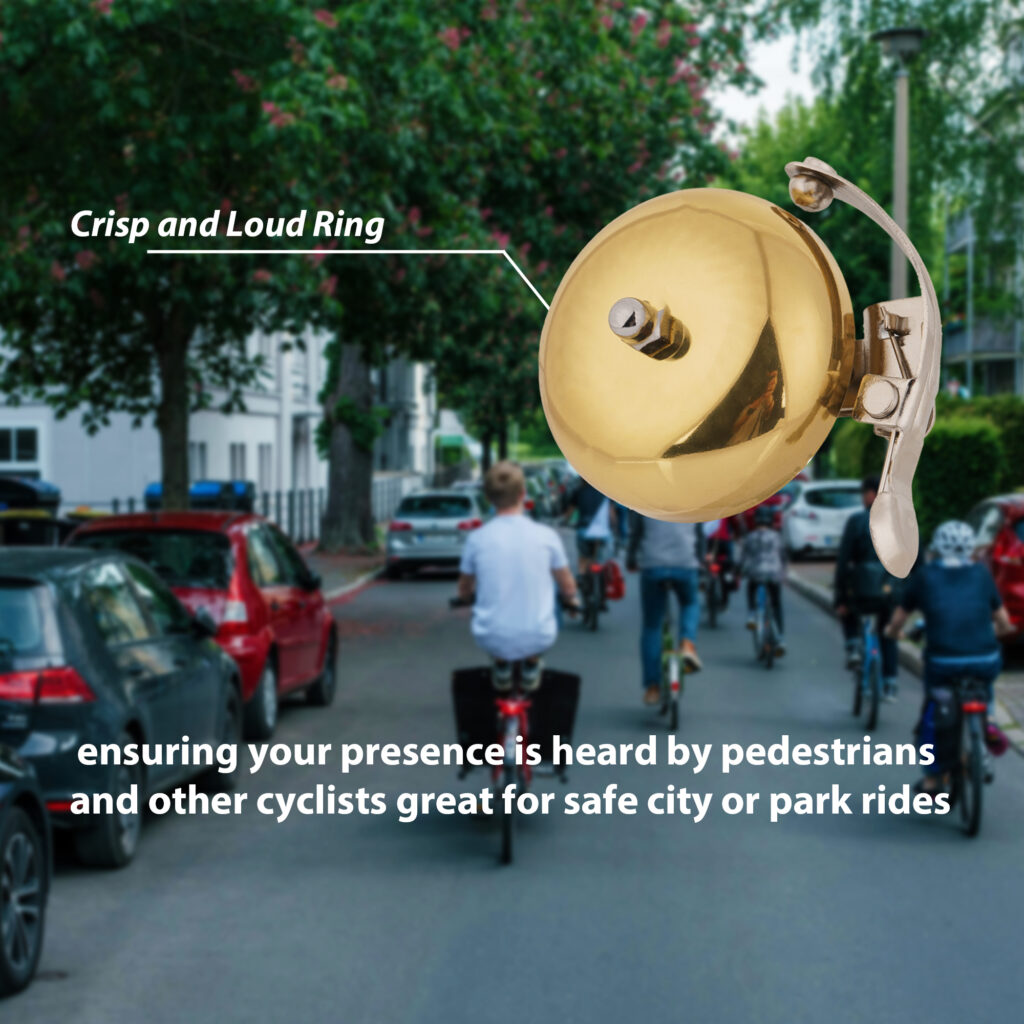
Improving Rider Safety with Classic Design: A Look at the RidingRush Bike Bell
For urban cyclists and recreational riders, the most critical accessory isn’t always a carbon fiber bottle cage or a GPS computer; often, it is the humble device used to alert others of your presence. Navigating shared-use paths, busy city streets, or neighborhood sidewalks requires a reliable method of communication. While shouting “on your left” is common, it can be startling or misunderstood by pedestrians. A mechanical bell offers a universal signal that cuts through ambient noise without aggression.
The RidingRush Bike Bell for Adults is designed to address this specific need for clear communication. By utilizing a classic metal construction rather than plastic internals, it aims to provide a sharp, resonant sound that enhances safety for the rider and those around them. Whether you are commuting to work on a road bike or cruising the neighborhood on a scooter, having a functional auditory signal is a fundamental aspect of responsible riding.
For those looking to upgrade their current safety setup or replace a broken stock bell, you can view the specifications for this model here: https://www.amazon.com/dp/B0FH9CBZQ5
The Role of Auditory Signals in Cycling Safety
The primary function of any bike bell is accident prevention. In mixed-traffic environments, visual signals (like hand gestures or lights) are often missed by pedestrians who have their backs turned to cyclists. An auditory signal bridges this gap. However, not all sounds are created equal.

Electronic horns can be jarring and rely on batteries that may fail in cold weather. Squeeze horns often lack the decibel level required to be heard over traffic. The RidingRush bell utilizes a traditional spring-loaded striker mechanism. When triggered, the striker hits the metal dome, producing a high-pitched “ping” or ring. This specific frequency is generally more effective at penetrating the background noise of wind and cars than lower-frequency sounds, making it a practical choice for safety-conscious riders.
Design and Build Quality
Durability is a frequent pain point with bicycle accessories. Many entry-level bells are constructed primarily of plastic, which can become brittle after prolonged exposure to UV rays and rain. The RidingRush model features a metal body with a polished finish. This material choice serves two purposes: longevity and acoustics.
Metal domes resonate longer than plastic or composite alternatives, creating a sustain in the ring that carries further. From an aesthetic standpoint, the red finish provides a visual contrast. While the product description notes its suitability for bicycles with darker colors, this is largely a stylistic advantage; a bright red bell on a matte black mountain bike or a dark grey road bike adds a touch of visibility and personalization to the cockpit.

Installation and Versatility
One of the barriers to adding accessories to a bike is the complexity of installation. Some modern mounts require removing grips or brake levers to slide a clamp onto the handlebar. The RidingRush bell is designed with a standard clamping mechanism that typically requires only a screwdriver to install.
This bell is marketed as suitable for a wide range of vehicles, including mountain bikes, road bikes, and scooters. The key factor for compatibility is handlebar diameter. Most adult bicycles use standard diameter bars near the grips, where a bell is most logically placed. The compact footprint of this bell ensures it does not interfere with gear shifters or brake levers, maintaining the ergonomics of the handlebar setup.
It is also noted as being suitable for “kid’s cars” and scooters. This versatility makes it a viable option for households with multiple types of rides, allowing for a standardized safety protocol across the family’s equipment.
Performance in Different Environments
The effectiveness of a bike bell varies depending on the riding context.
Urban Commuting
In city environments, the main competition is engine noise. A bell needs to be sharp enough to be heard by a pedestrian stepping off a curb or a car door opening. The metal construction of the RidingRush bell aids in producing a sound that is distinct from the hum of traffic.
Shared Paths and Parks
On quiet trails, the goal is to alert without startling. A polite ring from a reasonable distance allows walkers, joggers, and dog walkers to move aside safely. The mechanical control of the striker allows the rider to modulate the urgency to some degree—a light flick for a polite “hello,” and a firmer strike for a more urgent warning.
Mountain Biking
While bells are less common on technical single-track, they are increasingly popular on two-way trails to prevent head-on collisions around blind corners. The robust metal construction suggests this bell can withstand the vibrations associated with off-road riding better than flimsy plastic alternatives, though riders should ensure the clamp is tightened sufficiently to prevent rotation.

Buying Considerations: Pros and Limitations
When evaluating the RidingRush Bike Bell against other market options, it is important to weigh the benefits against potential limitations based on your specific riding style.
The Advantages
* Battery-Free Reliability: Unlike electric horns, this mechanical bell is always ready to work, regardless of how long the bike has been sitting in the garage.
* Acoustic Clarity: The metal dome produces a cleaner sound profile than plastic bells, which often sound dull or “thuddy.”
* Universal Aesthetics: The classic design fits visually on vintage cruisers, modern hybrids, and scooters alike.
The Trade-offs
* Manual Operation: The rider must remove their thumb from the grip momentarily to strike the bell. In high-speed emergency braking situations, this can be a slight ergonomic disadvantage compared to electronic buttons located directly next to the thumb.
* Volume Limits: While loud and clear, a mechanical bell cannot match the sheer decibel output of an air horn or a 100dB electric alarm. It is designed for pedestrian and fellow cyclist awareness, not for alerting a semi-truck driver on a highway.
* Bar Space: Riders with aero-bars or handlebars crowded with lights, computers, and phone mounts will need to ensure they have the physical space (usually about 2-3cm of width) to mount the clamp.
Conclusion on Long-Term Value
Investing in a quality bike bell is a small step that yields significant returns in safety and confidence. The RidingRush Bike Bell for Adults offers a return to the fundamentals: a simple mechanism, durable materials, and a clear sound. By moving away from disposable plastic accessories and choosing a metal-bodied bell, riders can expect better performance over the lifespan of the product.
For cyclists who prioritize reliability and want a safety tool that integrates seamlessly with the look of their bike—especially those with darker frames where the red accent pops—this bell serves as a functional and stylish addition. It provides the necessary auditory presence to navigate shared spaces responsibly.
To verify compatibility with your specific handlebar setup or to check current availability, you can find the product details here: https://www.amazon.com/dp/B0FH9CBZQ5
Frequently Asked Questions
Does this bell require batteries?
No, the RidingRush bell is entirely mechanical. It uses a spring-loaded striker to hit the metal dome, meaning it never requires charging or battery replacement.
Will this fit on a child’s bike or scooter?
The bell is designed to fit standard handlebars found on most bicycles and scooters. However, it is always recommended to check the diameter of the handlebars on smaller children’s bikes to ensure the clamp will tighten securely.
Is the bell weather-resistant?
The metal body and polished finish provide resistance to the elements. However, like all mechanical bike parts, it is good practice to wipe it dry after riding in heavy rain to maintain the spring mechanism and finish over the long term.
How loud is the bell?
The bell produces a “loud and clear” ring designed to be heard by pedestrians and other cyclists. It is tuned to a pitch that cuts through ambient noise, but it is not intended to be as loud as a car horn.
What tools are needed for installation?
Installation typically requires a standard Phillips head or flathead screwdriver to loosen and tighten the mounting screw on the clamp. No specialized bicycle tools are usually required.