Every cyclist knows the sound. It is a dry, grinding crunch that happens every time you pedal—the sound of road grit, sand, and old oil eating away at your drivetrain. A dirty chain doesn’t just sound bad; it creates friction that slows you down and accelerates wear on expensive components like your cassette and chainrings.
While the traditional method of scrubbing a chain involves a rag, a toothbrush, and a lot of patience, dedicated mechanical scrubbers have become the standard for riders who want efficiency without full disassembly. The RidingRush Chain Cleaner Bicycle Tool Kit positions itself as a comprehensive solution for this messy task.
This review evaluates the kit’s practicality, build quality, and actual cleaning performance to determine if it belongs in your home workshop.

The Problem with Traditional Chain Cleaning
For years, many cyclists relied on the “rag method.” You apply degreaser to a rag, wrap it around the chain, and backpedal. While this removes surface grime from the outer plates, it often fails to address the real enemy: the grit trapped *inside* the rollers and between the links. This internal abrasion is what causes “chain stretch” (elongation) and leads to skipping gears.
To properly flush out internal contaminants without removing the chain from the bike, you need a mechanism that forces solvent through the links while agitating the rollers. This is where the `RidingRush Chain Cleaner Bicycle Tool Kit` aims to bridge the gap between a superficial wipe-down and a professional ultrasonic cleaning.
Unboxing the RidingRush Kit: What’s Included?
The kit is designed as a three-part system for drivetrain maintenance. It is not merely a single tool, but a set intended to address the chain, the cassette, and the derailleur pulleys.
1. The Chain Scrubber Unit: This is the core of the kit. It features a split-case design that clamps over the chain. Inside, a series of rotating brushes are geared to spin as the chain moves through the device.
2. Gear Scraper (The “Sickle”): A hooked plastic tool designed to dig out the “black paste”—the mixture of oil and dirt—that accumulates between the tight spaces of your rear cassette cogs.
3. Detail Brush: A stiff-bristled brush used for scrubbing the derailleur jockey wheels and chainrings where the clamp-on tool cannot reach.
Design and Usability Analysis
The Clamp-On Mechanism
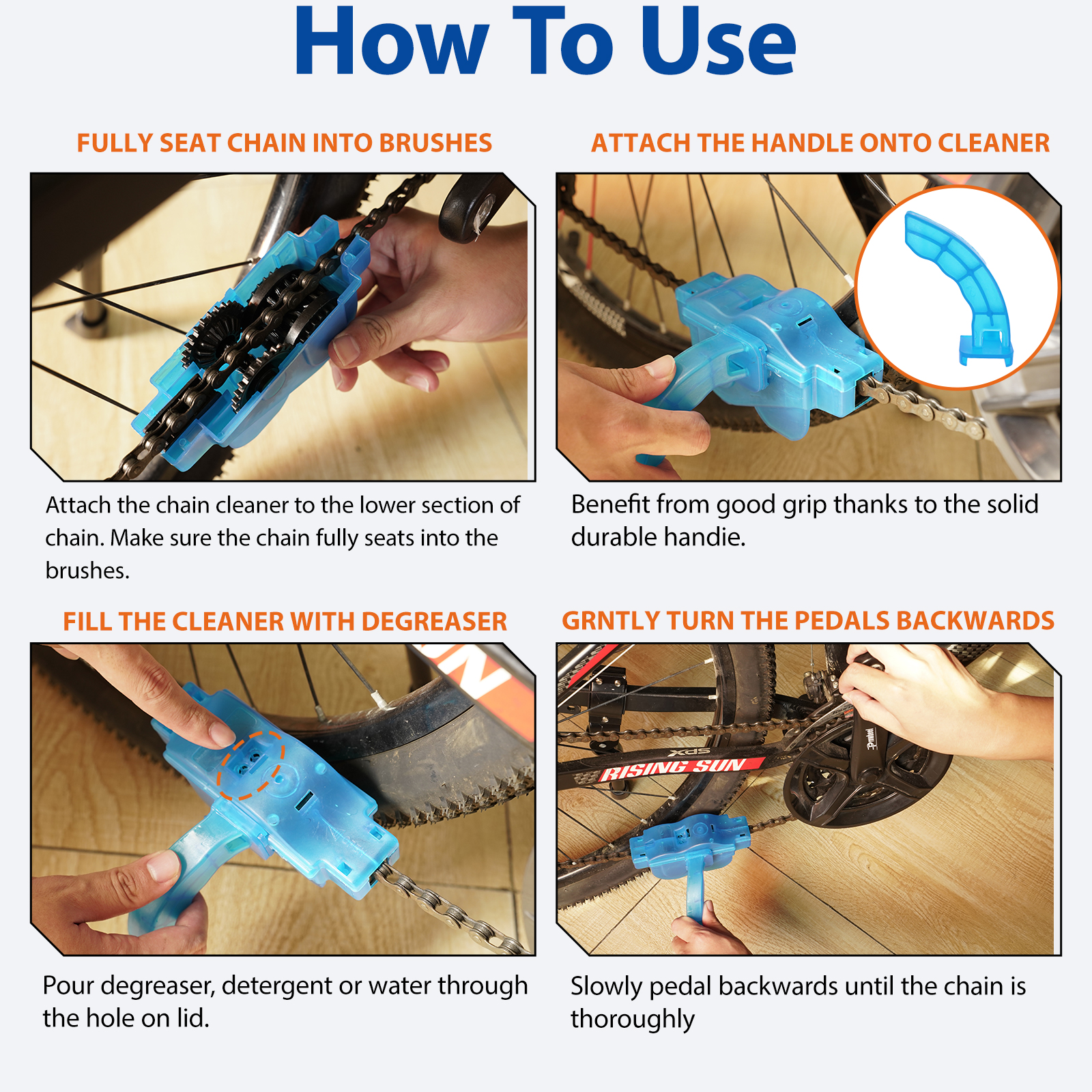
The primary appeal of this tool is the ability to clean the chain while it remains on the bike. The unit opens horizontally, allowing you to sandwich the chain between the top and bottom halves. A handle slides into place to lock the unit shut.
In practice, this design requires a steady hand. You must hold the handle of the scrubber with one hand while using the other to backpedal the crank arm. The internal reservoir holds your choice of degreaser (not included in the kit). As the chain enters the device, it is submerged in the solvent, scrubbed by the rotating bristles, and then passes through a squeegee section to strip away excess fluid.
Brush Configuration
The internal brushes are the differentiator here. Unlike a static sponge, the rotating brushes attack the chain from multiple angles—top, bottom, and sides. This multi-directional agitation is crucial for dislodging grit that has adhered to the inner rollers.
Compatibility
The RidingRush tool is versatile regarding bike types. It works effectively on:
* Road Bikes: Handles narrow 11 and 12-speed chains well.
* Mountain Bikes (MTB): Capable of handling slightly wider chains and heavier mud accumulation.
* Commuters and BMX: Suitable for single-speed chains, provided there is enough slack and accessibility.
*Note on Coaster Brakes:* Because the tool relies on backpedaling to cycle the chain through the brushes, it is difficult to use on bikes with coaster brakes (where backpedaling engages the brake) unless you have a stand that allows the rear wheel to spin freely backward.
Performance Evaluation: Does It Actually Work?
The Cleaning Process
Upon testing similar rotary cleaning systems, the difference in chain color is usually immediate. After 30 to 60 seconds of backpedaling with a quality degreaser, a black, greasy chain typically emerges metallic and shiny.
The RidingRush unit excels at containing the mess, though it is not entirely drip-free. As the chain exits the scrubber, it carries a small film of solvent. It is highly recommended to place a piece of cardboard or a drop cloth under the bike during use to catch any drips.
The Cassette and Pulleys
A clean chain on a dirty cassette will quickly become dirty again. This is where the included gear scraper proves its worth. The plastic hook is thin enough to fit between modern, tightly spaced cogs (10, 11, or 12-speed cassettes). Removing the buildup from the cassette teeth ensures that the fresh chain meshes perfectly with the gears, reducing the likelihood of skipping.
Durability of the Tool
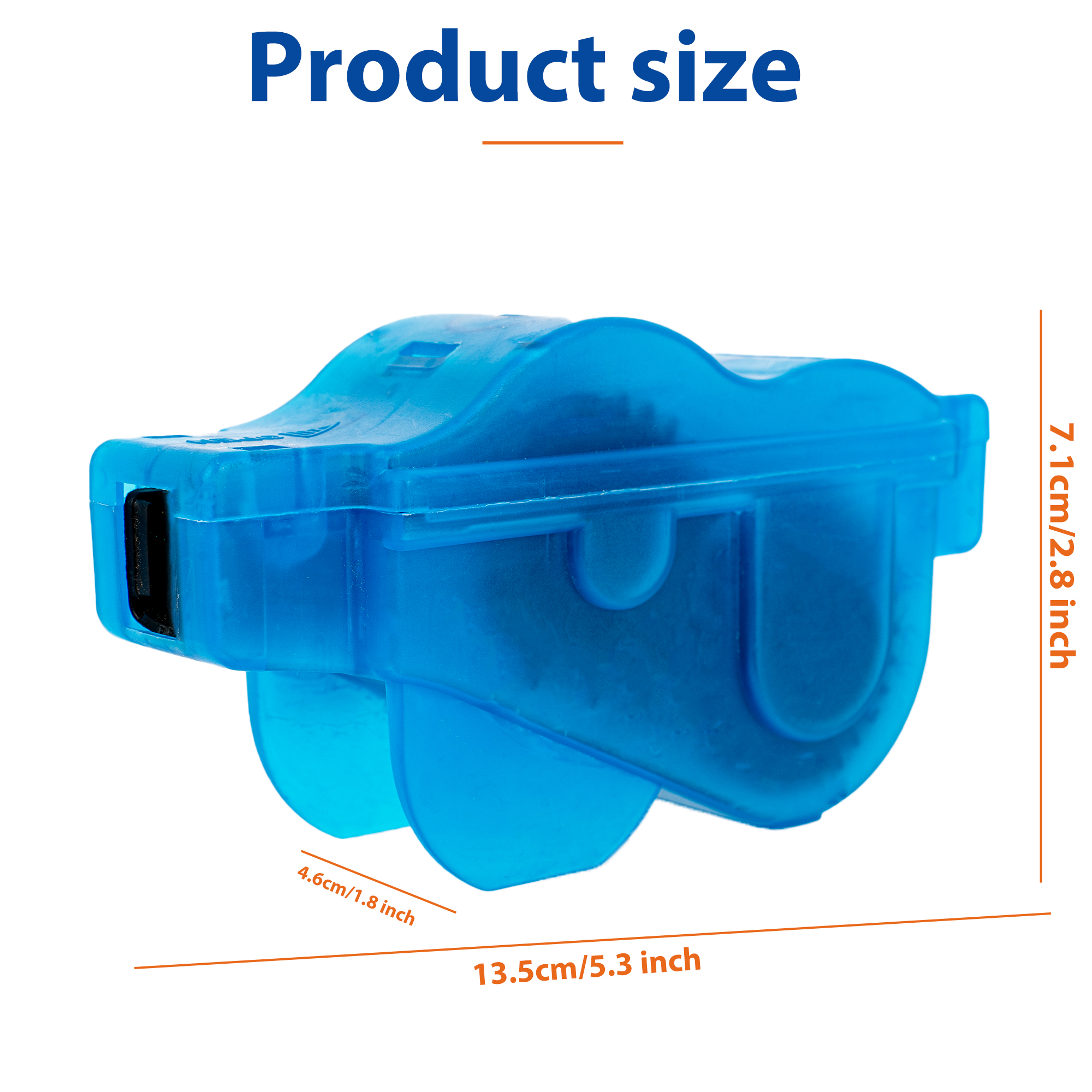
The casing is made of hard plastic. While durable enough for regular home use, it should not be dropped on concrete surfaces. The internal brushes are washable. Over time, these brushes will wear down, but for the average cyclist cleaning their bike once or twice a month, the lifespan is substantial.
Maintenance of the Maintenance Tool
Ironically, the chain cleaner itself requires cleaning after use. If you leave the dirty degreaser inside, the sludge will settle and gum up the internal gears.
Best Practice:
1. Drain the dirty solvent into a safe container for disposal.
2. Rinse the unit with hot water and a drop of dish soap.
3. Let it air dry before reassembling.
This extra step ensures the brushes rotate freely the next time you need them.
Comparison: Scrubber vs. Quick Link Removal
Advanced mechanics often argue that removing the chain via a “master link” and shaking it in a jar of solvent is the superior method. While true, that method requires specific pliers and increases the risk of damaging the master link if done too frequently.
The RidingRush system offers a “90% solution.” It gets the chain 90% as clean as a full removal, but with 20% of the effort. For the vast majority of cyclists, this trade-off is ideal because it encourages more frequent maintenance. A chain cleaned imperfectly every week lasts longer than a chain cleaned perfectly once a year.
Who Should Buy This?
This kit is best suited for:
* Daily Commuters: Who encounter road grime and need a quick weekend cleanup routine.
* Road Cyclists: Who value a silent, smooth drivetrain for long rides.
* MTB Riders: Who need to strip mud and sand immediately after a trail ride.
It is likely unnecessary for:
* Waxed Chain Users: If you use hot melt wax, you should not use liquid degreaser or wet scrubbers.
* Coaster Brake Cruisers: Due to the backpedaling requirement mentioned earlier.
Final Verdict
Bicycle maintenance is often neglected because it is viewed as difficult or messy. By consolidating the necessary brushes and the scrubber into a single package, this kit lowers the barrier to entry for proper bike care. It turns a 30-minute chore into a 5-minute task.
The transparent reservoir allows you to see the progress, and the inclusion of the cassette tools ensures you aren’t doing “half a job.” If you are looking to extend the life of your drivetrain and save money on replacement parts, the `RidingRush Chain Cleaning Tool Kit` is a sensible, high-value addition to your garage.
Frequently Asked Questions
Q: Do I need a specific type of fluid for this cleaner?
A: You can use any bicycle-specific degreaser. Some riders also use diluted citrus cleaners or warm soapy water for light cleaning, though a dedicated degreaser cuts through heavy oil much faster. Do not use gasoline or harsh solvents that might melt the plastic housing.
Q: Will this work on a motorcycle chain?
A: No. Motorcycle chains are significantly wider and heavier. This tool is designed specifically for bicycle chain dimensions (Road, MTB, BMX, etc.).
Q: How often should I use this tool?
A: It depends on your riding conditions. For dry road riding, once every 200-300 miles is standard. For muddy mountain biking or wet commutes, you should ideally clean the chain after every ride to prevent rust and grinding.
Q: Does the kit come with degreaser?
A: No, this is a hardware-only kit. You will need to purchase a bottle of degreaser separately.
Q: Can I replace the brushes inside?
A: The brushes are generally durable and washable. While they are technically removable for cleaning, they are not typically sold as separate replacement parts for this specific price-point of tool. However, with proper rinsing after use, they last for a very long time.