Every cyclist, whether commuting to work or enjoying a weekend trail ride, eventually faces the same logistical headache: where to put the essentials. Jersey pockets can sag under the weight of a modern smartphone, saddlebags are inconvenient to access while moving, and backpacks often lead to an uncomfortable, sweaty back. The ideal solution sits right in front of you—literally—on the handlebars.
A handlebar bag bridges the gap between accessibility and capacity, offering a designated spot for items you need within arm’s reach. The RidingRush Simple Bar Bag aims to fill this role with a design focused on organization and ease of access. This review evaluates its construction, usability, and real-world performance to help you decide if it is the right addition to your cycling kit.

The Problem with Carrying Essentials
For many riders, the ride itself is often interrupted by the need to stop and rummage for a snack, a multi-tool, or a phone. Traditional storage methods have distinct drawbacks. Saddlebags are great for spare tubes but terrible for things you need quickly. Frame bags can sometimes rub against knees or interfere with water bottle cages.
The handlebar bag category has exploded in popularity because it solves these accessibility issues. However, many options are either too bulky, affecting the bike’s handling, or too unstructured, making it difficult to find small items. A well-designed bag should be unobtrusive yet spacious enough to hold the daily necessities without requiring a complex mounting system. If you are looking to streamline your carry setup, you can examine the layout of the RidingRush Simple Bar Bag to see how it might organize your ride.
Design and Build Quality
Material and Durability
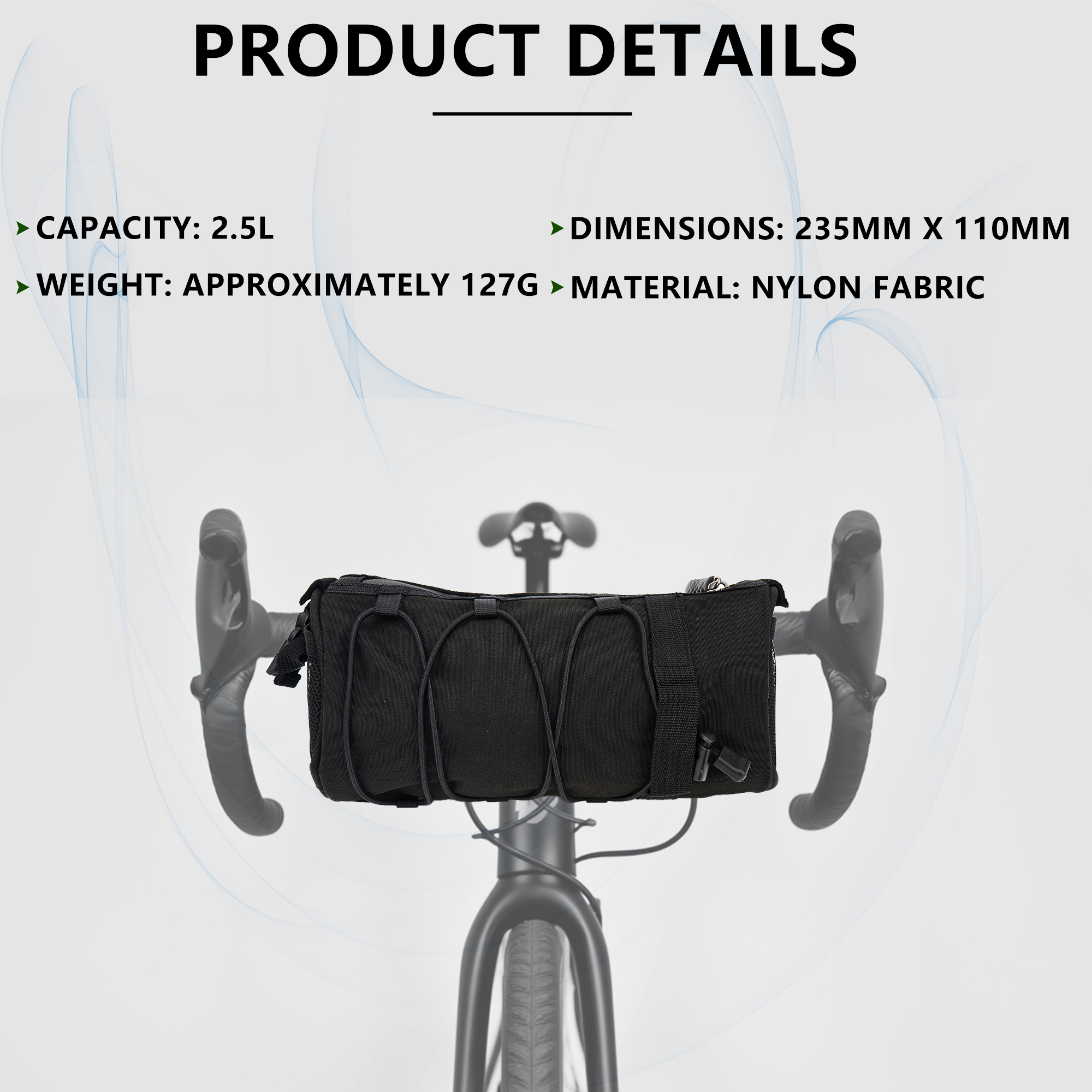
The RidingRush bag is constructed from 210D nylon. In the world of outdoor gear, denier (D) measures the thickness of the fabric fibers. 210D strikes a balance between being lightweight and offering resistance to abrasion. It is robust enough to handle the occasional scrape against a brick wall or brush against a bush on a trail, but it isn’t as heavy or stiff as the 1000D Cordura found on heavy-duty bikepacking gear.
The material is treated to be splash-proof. It is important to distinguish this from being fully waterproof. The bag will repel road spray, mud splatters, and light drizzle effectively, keeping the contents dry during typical commuter conditions. However, in a torrential downpour, moisture may eventually seep through the seams or zippers. For electronics, using a secondary plastic bag inside is a prudent precaution during severe weather.
Compact Form Factor
With a capacity of approximately 2 liters, this bag falls into the “compact” category. It is not designed to carry a sleeping bag or a week’s worth of clothes. Instead, it is sized perfectly for a “day loadout”: a windbreaker, a smartphone, keys, a wallet, energy bars, and a small repair kit. The low profile ensures that it does not obscure your view of the front wheel or interfere with lights and cycling computers mounted on the handlebars.
Usability and Features
Multi-Pocket Organization
One of the most frequent complaints about cylindrical handlebar bags is the “black hole” effect—items tend to jumble together at the bottom. The RidingRush addresses this with a structured approach to pockets. Having separate compartments allows you to isolate sharp objects, like keys or multi-tools, from delicate items like your phone screen.
The side pockets are particularly useful for small items that need to be grabbed blindly, such as empty gel wrappers or a house key. The elastic band feature adds versatility, potentially allowing you to lash a light pair of gloves or a small map to the exterior for immediate access.
One-Handed Accessibility
Safety on the bike often dictates that you keep at least one hand on the bars at all times. The top zip and flap design of this bag are engineered for one-handed operation. This is a critical feature for road cyclists and commuters who want to grab a snack or check a notification without coming to a complete stop. The zipper pulls are substantial enough to be operated while wearing cycling gloves, a small detail that makes a significant difference in cooler weather.
Installation and Stability
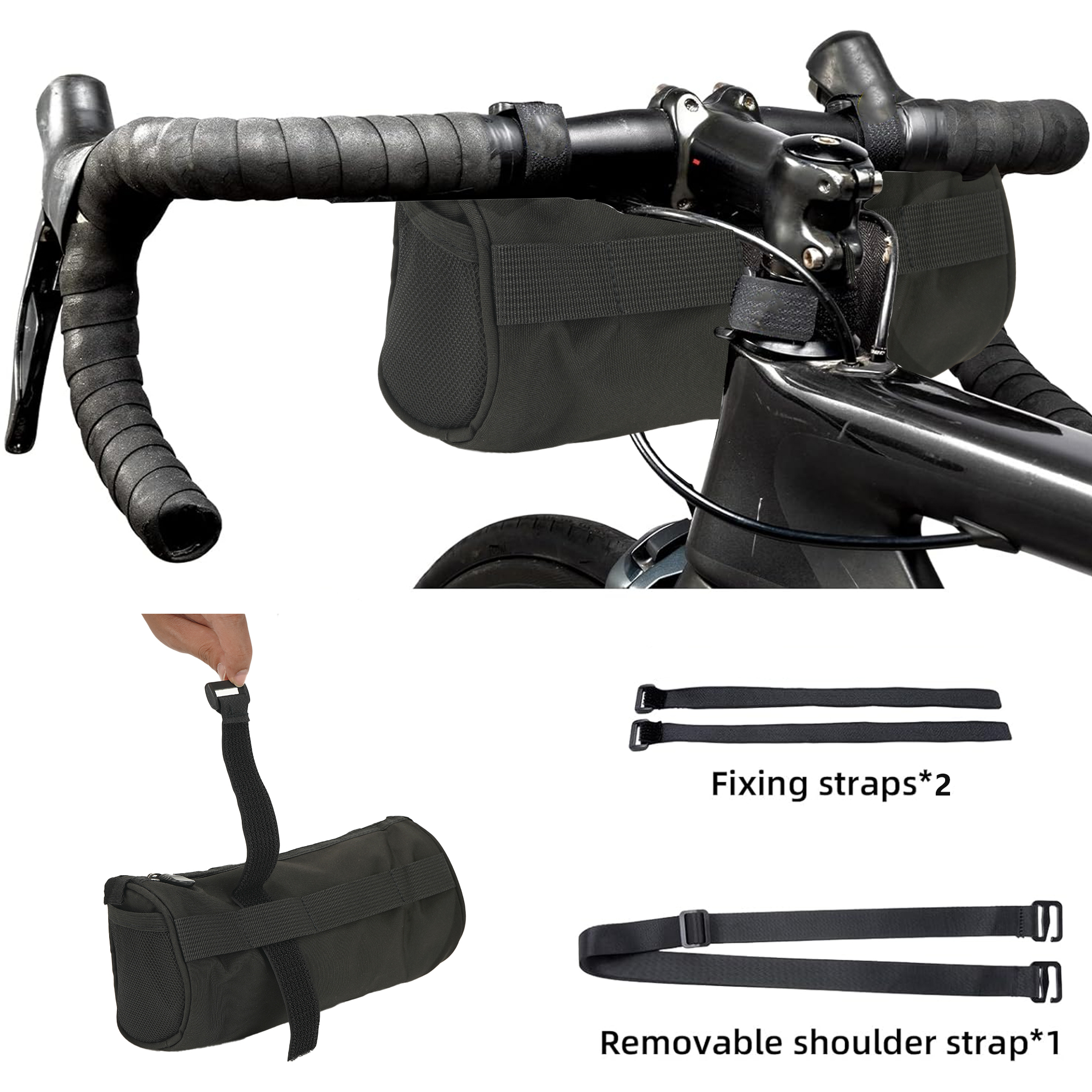
The Quick-Mount System utilizes straps rather than rigid hardware. This offers two distinct advantages:
1. Versatility: Straps can conform to various handlebar diameters and shapes, from thick carbon road bars to standard mountain bike risers.
2. Speed: You can remove the bag in seconds if you are locking your bike outside a shop and want to take your valuables with you.
However, strap-based systems can sometimes sway if the bag is overloaded. For a bag of this volume (~2L), sway is rarely a major issue, but tightening the straps securely against the bar and head tube is essential to prevent bouncing on rough terrain.
Buying Considerations: Who is this for?
The Ideal User
* The Urban Commuter: You need a safe place for your phone, wallet, and keys that isn’t your pocket. You want to easily detach the bag when you park.
* The Road Cyclist: You go on long weekend rides and need space for extra food and a vest, but you don’t want a heavy bag affecting your steering.
* The Gravel Rider: You need durable gear that resists dust and mud but doesn’t require the capacity of a full touring rig.
Who Should Look Elsewhere?
* The Expedition Bikepacker: If you need to carry sleeping gear or cooking equipment on your handlebars, a 2L capacity will be insufficient. You would need a handlebar roll with 10L+ capacity.
* The Deep Water Crosser: If you anticipate submerging your bike or riding for hours in heavy storms without fenders, a fully welded, submersible dry bag would be a safer choice for electronics.
Comparison to Alternatives
When evaluating handlebar storage, the main competitors are saddlebags** and **top tube bags.
* Vs. Saddlebags: Saddlebags are aerodynamic and out of the way, but accessing them requires stopping the bike. The RidingRush bag offers superior accessibility.
* Vs. Top Tube Bags: Top tube bags (or “bento boxes”) sit behind the stem. While they offer great access, they are often much smaller (usually under 1L) and can sometimes interfere with stand-over clearance. The RidingRush offers double the capacity without compromising the rider’s space.
Verdict: A Practical Upgrade for Daily Riding
The handlebar bag has graduated from a niche touring accessory to a staple of modern cycling, and for good reason. It frees up your pockets and makes the ride more comfortable. The RidingRush Simple Bar Bag succeeds by focusing on the fundamentals: keeping gear organized, keeping it accessible, and keeping the installation simple.
It avoids the complexity of rigid mounting brackets in favor of a lightweight, adaptable strap system. While it isn’t a massive cargo hauler, its 2-liter size is the “Goldilocks” capacity for the majority of riders—large enough for essentials, but small enough to remain unobtrusive. For cyclists prioritizing organization and convenient access on their daily routes, the RidingRush Simple Bar Bag stands out as a sensible, value-driven choice.
Frequently Asked Questions
Will this bag fit on a road bike with drop bars?
Yes, the bag is designed to fit between the drops of most standard road handlebars. Its width is compact enough that it typically does not interfere with the shifting levers or brake cables, though you should always check your specific cable routing during installation.
Is the bag machine washable?
While the 210D nylon is durable, machine washing can damage the water-resistant coating and the internal structure. It is recommended to wipe the bag clean with a damp cloth and mild soap if it gets muddy.
Can I fit a large smartphone in the pockets?
The main compartment is spacious enough to accommodate modern large smartphones, even with protective cases. The separate pockets help ensure the phone doesn’t get scratched by keys or tools stored in the same bag.
Does the bag bounce around on rough terrain?
The strap system is designed to be secure, but some movement is normal with any soft-mount bag on very rough trails. For road and gravel use, properly tightened straps will keep the bag stable. If you are riding aggressive technical trails, ensure the straps are cinched tight to minimize movement.
Is the material waterproof?
The material is splash-proof and water-resistant, meaning it handles light rain and road spray well. It is not fully waterproof (submersible), so for heavy, sustained downpours, using a dry bag inside is recommended for sensitive electronics.