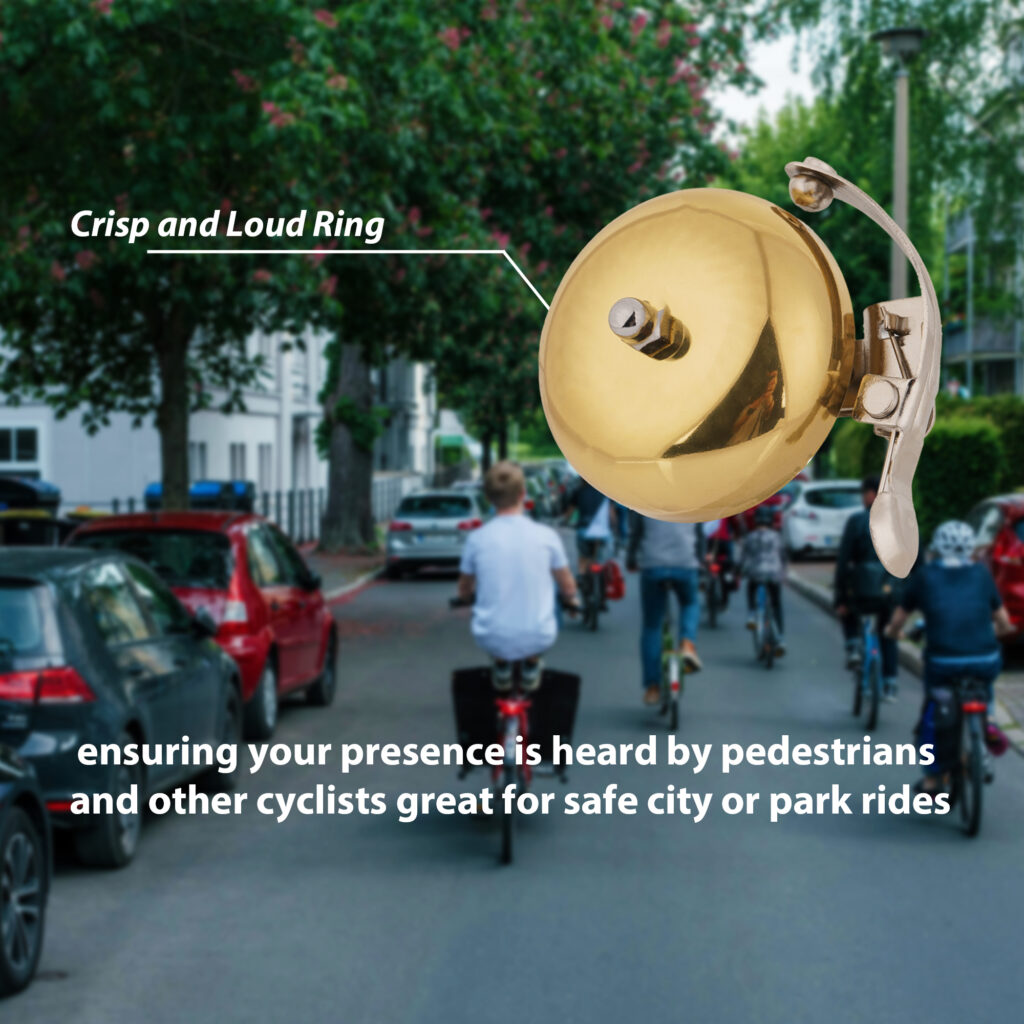
Cycling on shared paths or busy city streets presents a unique challenge: making your presence known without being aggressive. While voice commands like “on your left” are common, they are often lost in the wind or misunderstood by pedestrians wearing headphones. This is where the mechanical reliability of a bicycle bell becomes essential. It is not just an accessory; it is a primary communication tool that ensures the safety of both the rider and those around them.
In the market of cycling accessories, materials matter just as much as mechanics. Plastic bells often produce a dull “thud” that fails to carry over distance, while aluminum can sound tinny and cheap. The RidingRush Brass Bike Bell positions itself as a solution to these common issues by utilizing brass construction—a material known for its superior acoustic resonance. This review evaluates whether this vintage-inspired bell delivers the performance required for modern commuting and recreational riding, looking past the aesthetics to focus on real-world functionality.

The Acoustics of Safety: Why Brass?
When evaluating a bike bell, the most critical metric is the quality of the sound. A bell that cannot be heard is essentially useless, and a bell that sounds unpleasant may cause pedestrians to react unpredictably.
Resonance and Tone
Brass has long been the gold standard for musical instruments and high-quality bells because of its density and acoustic properties. Unlike plastic or cheaper steel alloys, brass produces a sound that is rich in harmonics. When the striker hits the dome of the RidingRush bell, it generates a clear, piercing ring rather than a flat clunk.
The benefit of this specific tone is its ability to cut through ambient noise. In an urban environment filled with low-frequency rumbling from cars and buses, the high-frequency “ping” of a brass bell occupies a different part of the sound spectrum. This makes it distinct and easier for the human ear to locate. For parents outfitting a child’s bike or commuters navigating greenways, this clarity translates directly to improved reaction times from others on the path.
Sustain and Decay
Another characteristic of brass is its sustain. After the initial strike, the dome continues to vibrate, creating a lingering ring. This long decay is useful because it provides a continuous signal to pedestrians who might not have registered the initial impact sound. A short, sharp sound can sometimes be mistaken for a mechanical click or road debris, but a resonant ring is universally recognized as a bicycle signal.
Design and Build Quality
While performance is paramount, the physical construction of the accessory determines its longevity. Bicycle components are exposed to the elements—rain, UV rays, and temperature fluctuations—so durability is a non-negotiable factor.
Material Durability
The RidingRush bell features a brass dome, which offers natural resistance to corrosion. While brass can develop a patina over time (a darkening of the metal due to oxidation), this does not negatively impact the sound or structural integrity. In fact, many cyclists appreciate the aged look that brass acquires after seasons of use. This contrasts sharply with painted steel bells, which can rust and eventually seize up if the paint chips.
Vintage Aesthetic
The bell sports a classic, minimalist profile. Measuring approximately 3.1 x 2.3 x 2.2 inches (8 x 5.8 x 5.5 cm), it is compact enough not to crowd the handlebars but large enough to be easily operated with a thumb. The design is reminiscent of mid-20th-century cycling gear, making it a suitable visual match for:
* Vintage cruisers
* Urban commuter bikes
* Folding bikes
* Retro-styled scooters

Installation and Compatibility
One of the most frequent hurdles when buying bike accessories is ensuring they fit the specific geometry of your bicycle. Handlebars come in various diameters, typically ranging from the standard 22.2mm found on mountain bikes and hybrids to the thicker 31.8mm found on modern road bikes.
Mounting Mechanism
The RidingRush bell utilizes a standard clamp mechanism. The installation process is straightforward, generally requiring only a screwdriver to tighten the bracket around the bar. It is designed to fit “most standard bicycle handlebars,” which typically refers to the 22.2mm to 25.4mm range common on city bikes, kids’ bikes, and scooters.
If you are riding a high-performance road bike with oversized handlebars or aero bars, you may need to check your bar diameter or mount the bell near the stem where the bar tapers. However, for the vast majority of recreational and commuter bicycles, the fit is universal and secure. Once tightened, the metal clamp ensures the bell does not rotate or slip when the striker is flicked—a common annoyance with rubber-band mounted bells.
Real-World Usage Scenarios
To understand the practical value of this product, it helps to look at where it performs best.
The Urban Commuter
For the daily rider, a bell is a legal requirement in many jurisdictions and a safety necessity everywhere else. The loud, clear output of this brass bell is ideal for signaling intentions when overtaking other cyclists or alerting pedestrians stepping off curbs. The thumb-operated striker allows the rider to keep a firm grip on the handlebars while signaling, maintaining control of the bike in traffic.
Children’s Safety
Equipping a child’s bike with a high-quality bell teaches them the basics of trail etiquette. Because the RidingRush bell is easy to trigger and produces a rewarding sound, children are more likely to use it. The durability of the brass also means it can withstand the inevitable drops and scrapes that come with learning to ride.
Trail Riding
While mountain bikers often use bear bells (which ring continuously) or timber bells, a traditional striker bell is still useful for cross-country riding on multi-use trails. It allows for a polite warning when approaching hikers or equestrians from behind, preventing the startle response that can lead to accidents.

Evaluating the Trade-offs
No product is perfect, and transparency regarding limitations is key to making the right purchase decision.
Pros:
* Superior Sound: The brass construction yields a loud, resonant tone that plastics cannot replicate.
* Aesthetic Appeal: The gold-tone finish and vintage shape add a touch of class to any handlebar setup.
* Longevity: Metal construction resists weather damage and rust better than cheaper alternatives.
* Ease of Use: The spring-loaded striker is intuitive and requires minimal force to operate.
Cons:
* Sizing Limits: While it fits standard bars, riders with 31.8mm road bars may find the clamp too small without an adapter or specific placement.
* Weight: Brass is heavier than plastic. For “weight weenies” counting every gram on a carbon fiber race bike, this might be a consideration, though negligible for general riders.
* Maintenance: To keep the high-polish shine, brass may require occasional polishing, though many prefer the natural patina.
Comparison to Alternatives
When shopping for bike bells, you will typically encounter three main types: the classic brass striker (like the RidingRush), the “ding-dong” bell, and the electric horn.
* Ding-Dong Bells: These are much larger and produce a two-tone sound. While they are loud, their bulk makes them difficult to mount on crowded handlebars, and they are often too heavy for lightweight bikes.
* Electric Horns: These are incredibly loud and can mimic car horns. However, they require batteries, are susceptible to water damage, and their aggressive sound can often startle pedestrians rather than politely alerting them.
* The Brass Striker: This sits in the “goldilocks” zone. It is compact, requires no batteries, and produces a sound that is authoritative yet polite.
Conclusion: Is It Worth the Upgrade?
The humble bike bell is often an afterthought, yet it is one of the few accessories that actively contributes to accident prevention. Upgrading from a stock plastic bell to a brass model is a small change that offers a significant improvement in communication quality on the road. The clarity of the tone ensures you are heard earlier and more clearly, which is the foundational requirement of cycling safety.
Whether you are restoring a vintage bicycle, outfitting a kid’s scooter, or simply tired of your current bell failing to alert distracted pedestrians, the RidingRush Brass Bike Bell provides a durable, acoustic solution. Its blend of classic design and functional sound quality makes it a reliable choice for cyclists who value both form and function.
Frequently Asked Questions
Does this bell fit on children’s bikes?
Yes, the bell is designed to fit standard bicycle handlebars, which includes the diameter found on most children’s bikes and scooters. The lever is also easy enough for a child to operate.
Will the brass rust if I leave my bike outside?
Brass is highly resistant to red rust. Over time, it may develop a patina (a greenish or brownish surface layer) due to oxidation, which protects the metal underneath. This does not affect the sound, but if you prefer the shiny gold look, it can be polished.
Do I need special tools to install it?
No special tools are required. The clamp is typically tightened with a standard Phillips or flathead screwdriver. Installation usually takes less than two minutes.
Is the sound loud enough for city traffic?
The bell produces a sharp, high-pitched ring that cuts through moderate ambient noise effectively. However, for high-speed traffic situations involving sealed motor vehicles, no bicycle bell is as effective as an air horn; this bell is primarily designed for alerting pedestrians and other cyclists.
Can this be installed on either the left or right side?
Yes, the mount is versatile. Most riders install it on the left or right side depending on which hand they prefer to use for signaling, provided there is space on the handlebar adjacent to the grip.