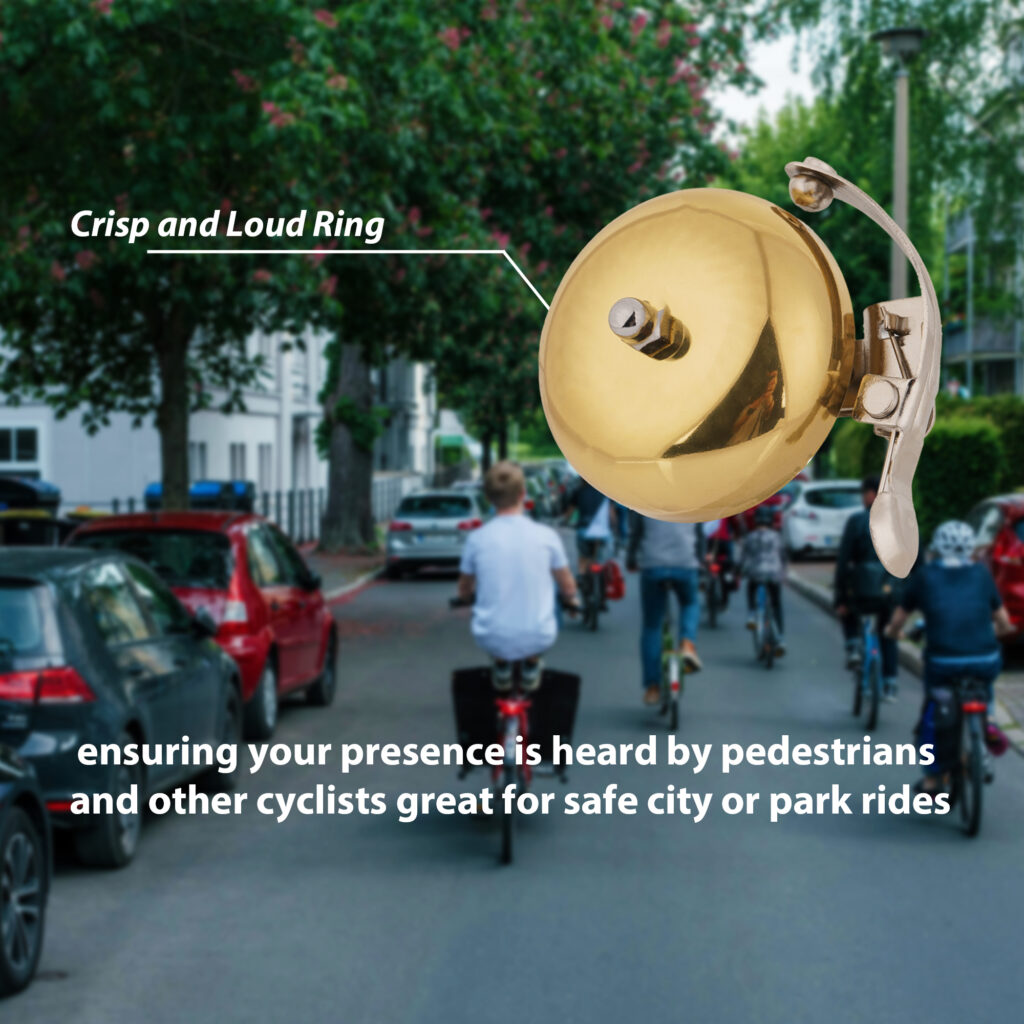
Shared paths and urban bike lanes are busier than ever. Whether you are navigating a morning commute through the city or taking a leisurely weekend ride on a local trail, the ability to alert pedestrians and other cyclists is not just a courtesy—it is a safety necessity. The market is flooded with alert devices ranging from high-decibel electronic horns to subtle “invisible” ringers, but the classic mechanical bell remains a favorite for its reliability and distinct tone.
For cyclists looking to balance aesthetic appeal with functional volume, the RidingRush Bike Bell for Adults aims to offer a solution. With a focus on clear sound projection and a timeless metal construction, this accessory is designed to cut through ambient noise without the aggression of an air horn. In this evaluation, we assess the build quality, installation process, and real-world performance of this red metal bell to see if it earns a permanent spot on your handlebars.

The Role of Audible Signaling in Cycling Safety
Before diving into the specifics of the hardware, it is important to understand why the mechanism of a bell matters. A bike bell serves as a primary communication tool. In mixed-use environments, a vocal shout can often be misinterpreted as aggression, whereas the chime of a bell is universally understood as a “passing” or “presence” signal.
However, not all bells are created equal. Plastic internals often dampen the sound or fail in wet weather, while overly complex strikers can jam. The RidingRush model utilizes a traditional spring-loaded striker against a metal dome. This design choice is intended to produce a sharp, resonant ring that carries further than the dull “thud” of plastic alternatives. For riders who prioritize a mechanical, battery-free safety alert that integrates easily with road or mountain bike setups, the https://www.amazon.com/dp/B0FH9CBZQ5 provides a straightforward, classic option worth considering.
Design and Build Quality
The first thing you notice about this specific model is the visual profile. It moves away from the utilitarian black plastic found on stock bicycles, opting instead for a polished metal body with a vibrant red finish.
Aesthetic Impact
The choice of red is functional as well as stylistic. On bicycles with darker color schemes—such as matte black mountain bikes or dark grey commuter scooters—the red bell acts as a visual accent. It adds a touch of retro flair without looking out of place on modern geometry. The polished finish suggests a level of weather resistance, which is critical for commuters who ride regardless of the forecast.
Material Durability
The core construction relies on metal components rather than brittle plastics. This is a significant factor for longevity. Plastic bells often suffer from UV degradation, becoming brittle and snapping after a season or two of sun exposure. Metal domes, conversely, tend to maintain their acoustic properties and structural integrity over time. The internal spring mechanism feels tensioned enough to prevent the striker from rattling over bumps, yet light enough to trigger with a simple thumb flick.

Real-World Performance: Sound and Usability
The true test of any bike bell is how it performs in traffic. A bell that sounds pleasant in a quiet garage may be completely inaudible next to a moving bus or in a windy park.
Acoustic Clarity
The RidingRush bell produces a sound described as “loud and clear.” In practice, metal domes produce a pitch that cuts through lower-frequency background noise (like tire hum or engine idle) better than lower-pitched honks. The sound is sharp and immediate. It does not sustain for an extended period, which allows for rapid, repeated ringing if a pedestrian does not hear the first signal. This repetition is often key in crowded environments where a single “ding” might be missed.
Ergonomics and Activation
The lever placement is designed for thumb operation. This allows the rider to keep their grip on the handlebars while signaling, maintaining control of the bike. This is particularly important for mountain bikers or scooter riders who may be navigating uneven terrain while needing to alert others. The resistance on the striker is balanced; it does not require significant force, making it accessible for riders with smaller hands or lower grip strength.
Installation and Compatibility
One of the frequent frustrations with cycling accessories is the mounting interface. Handlebars vary significantly in diameter, from the thin bars of vintage road bikes to the thicker clamps of modern mountain bikes and electric scooters.
The RidingRush bell includes installation components designed to accommodate this variance. The mounting bracket uses a standard clamp system that tightens via screws, ensuring the bell does not rotate or slip downward when the striker is hit.
Key Installation Notes:
* Versatility: The mount is adaptable for various vehicles, including mountain bikes, road bikes, and even scooters or kid’s cars.
* Tooling: Standard household tools (typically a screwdriver) are usually sufficient for securing the bracket.
* Positioning: Because of its compact footprint, it can be mounted on either the left or right side of the stem, depending on rider preference and shifter placement.

Critical Considerations and Trade-offs
While the RidingRush bell offers a robust set of features, no accessory is perfect for every scenario. It is important to weigh the benefits against potential limitations based on your specific riding style.
Volume Limits in Heavy Traffic
While the bell is “loud and clear” for mixed paths and city streets, it is not an air horn. If you frequently ride in high-speed vehicular traffic where drivers have their windows up and music playing, a mechanical bell of any brand may struggle to penetrate the cabin of a car. In these specific high-risk scenarios, this bell serves better as a pedestrian and fellow-cyclist alert rather than a vehicle deterrent.
Maintenance of Mechanical Parts
Unlike electronic horns which are sealed, mechanical bells have moving parts exposed to the elements. While the metal construction is durable, the spring mechanism may require an occasional drop of lubricant if used extensively in rain or salt-heavy winter conditions to prevent rust or sticking.
Market Comparison
To understand where the RidingRush fits in the broader ecosystem, it helps to compare it against common alternatives:
* Vs. Electronic Horns: Electronic units are louder but require batteries and are often bulky. They lack the “friendly” tone of a bell, often startling pedestrians rather than alerting them. The RidingRush requires no power source and offers a more polite signal.
* Vs. “Invisible” Ring Bells: Some modern bells wrap around the cable housing to effectively disappear. While sleek, they often sacrifice volume for stealth. The RidingRush embraces its presence, using the metal dome to maximize volume.
* Vs. Generic Plastic Bells: The entry-level plastic bells found on department store bikes often produce a dull thud and break easily. The upgrade to a metal body offers significantly better sustain and durability.
Who is this Bell For?
This accessory is best suited for:
* Urban Commuters: Who need to signal presence at intersections and on shared paths.
* Recreational Riders: Who want a stylish, classic look for their bike.
* Parents and Educators: Who need reliable equipment for family rides or teaching safety.
* Scooter Owners: Who require an aftermarket alert system that fits standard handlebars.
It may not be the right fit for:
* Competitive Road Racers: Who count every gram of weight and prefer strictly aerodynamic cockpits.
* Highway Riders: Who need 100dB+ horns to alert trucks and cars.
Conclusion: Is the RidingRush Bell Worth the Cockpit Space?
The bicycle bell is a humble piece of equipment, but its function is vital. It facilitates smoother interactions between the rider and the world around them. The RidingRush Bike Bell succeeds by sticking to the fundamentals: a metal construction that resonates clearly, a mechanism that is easy to trigger, and a visual design that looks premium on the handlebars.
It avoids the complexity of batteries and the fragility of cheap plastics, offering a “set it and forget it” reliability that many cyclists appreciate. The red finish provides a nice contrast for darker bike frames, adding a customized feel to a standard safety requirement. If you are seeking a durable, audible, and stylish way to ensure you are heard on your daily routes, the https://www.amazon.com/dp/B0FH9CBZQ5 is a commendable addition to your cycling gear.
Frequently Asked Questions
Q: Will this bell fit on a thick mountain bike handlebar?
A: The bell is designed with installation components suitable for various handlebar diameters, including those found on standard mountain bikes, road bikes, and scooters.
Q: Is the sound loud enough for city riding?
A: Yes, the metal dome produces a crisp, loud ring designed to alert pedestrians and other cyclists in busy or crowded environments, though it may not be audible to drivers inside soundproofed cars.
Q: Is the red color paint or anodized metal?
A: The description notes a sleek metal body with a polished finish. This typically implies a durable coating that resists chipping better than standard paint, maintaining the stylish look over time.
Q: Can this be installed on a child’s bike?
A: Yes, the mounting system is versatile enough to accommodate the handlebars of kid’s cars (bicycles), provided there is sufficient space on the bar for the clamp.
Q: Is the bell waterproof?
A: Being a mechanical device with a metal body, it is resistant to rain and water exposure. However, like all mechanical bike parts, drying it off after heavy rain helps maintain the spring mechanism’s longevity.