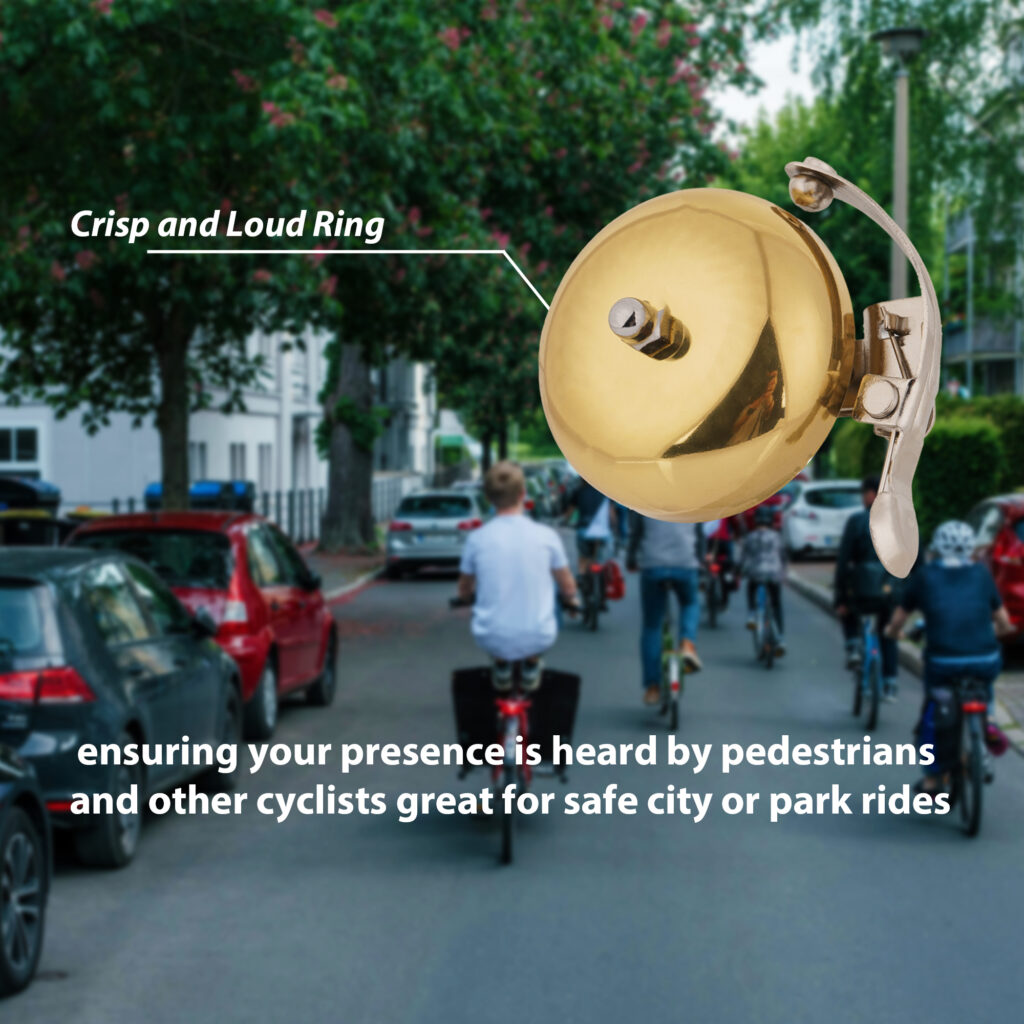
Improving Safety on Shared Paths: A Review of the RidingRush Brass Bike Bell
Cyclists who frequent multi-use paths, urban bike lanes, or busy parks understand the challenge of communicating with pedestrians and other riders. The polite verbal warning, “on your left,” is often lost to wind noise, headphones, or general conversation. Conversely, shouting can be perceived as aggressive. This creates a safety gap where a cyclist needs a signaling device that is distinct, audible, yet courteous.
The bicycle bell remains one of the most effective tools for closing this gap. However, not all bells are created equal. While plastic and aluminum options are ubiquitous, they often lack the resonance required to be heard at a safe distance. The RidingRush Brass Bike Bell aims to solve this by utilizing a material known for its acoustic properties—brass—combined with a mounting system designed for modern bicycle geometries.
For cyclists evaluating safety accessories that balance auditory performance with a classic aesthetic, the RidingRush Brass Bike Bell specifications can be found here: https://www.amazon.com/dp/B0FH9FVQXM

The Acoustics of Brass: Why Material Matters
The primary function of a bike bell is to produce a sound wave that cuts through ambient noise. In the hierarchy of bell materials, plastic produces a dull thud, aluminum creates a sharp but short-lived “ping,” and brass produces a warmer, resonant ring with a longer sustain.
The RidingRush bell leverages this brass construction to deliver a clear, melodious tone. The physics of the material allows the sound to linger longer than it does with cheaper alloys. This “sustain” is critical in real-world riding scenarios. A short “ping” might be missed if a pedestrian is listening to music or talking, but a resonating ring provides a longer window of time for the human ear to register the signal.
From a safety perspective, the tone of a brass bell is generally associated with bicycles, which helps pedestrians instinctively understand what is approaching without the startle response often caused by electronic horns or shouting.
Universal Compatibility and Installation
One of the frequent frustrations with bicycle accessories is the variance in handlebar standards. Road bikes, mountain bikes, and commuter hybrids often use different diameter bars, ranging from the standard 22.2mm found on grips to the 31.8mm found on the clamp areas of modern road and gravel bikes.
The RidingRush unit addresses this with a mounting range of 0.87 to 1.25 inches (22.2mm to 31.8mm). This versatility allows the bell to be mounted in various positions:
* Near the grip: For immediate thumb access on flat-bar hybrids and mountain bikes.
* On the tops: For road cyclists who ride with their hands on the center of the bar.
* On scooter stems: The clamp accommodates the thicker stems often found on electric scooters.
The installation process utilizes a straightforward mounting system that does not require specialized bicycle tools, making it accessible for home mechanics.

Durability and Environmental Resistance
Bicycle components are exposed to the elements—rain, UV rays, and road grit. Steel bells can suffer from surface rust, and plastic internals can become brittle and snap over time.
Brass is naturally resistant to corrosion. Over time, brass may develop a patina—a darkening of the metal due to oxidation—but this does not negatively affect the structural integrity or the sound quality of the bell. In fact, many cyclists prefer the aged look of brass as it complements the aesthetic of vintage restorations, steel touring bikes, and leather accessories.
The striker mechanism is the only moving part and is designed for repeated use. By avoiding complex gears or batteries found in electronic alternatives, the mechanical simplicity of this bell increases its long-term reliability. There are no batteries to die mid-ride, ensuring the safety device is always operational.
Comparison: Brass Bell vs. Electronic Horn
When outfitting a bike for safety, riders often choose between a traditional bell and an electronic horn. Understanding the trade-offs is essential for choosing the right tool for your specific riding environment.
* Electronic Horns: These devices are capable of high decibel outputs, often exceeding 100dB. While effective for alerting cars in heavy traffic, they are often too loud for shared pedestrian paths, causing pedestrians to freeze or jump unpredictably. They also rely on batteries.
* RidingRush Brass Bell: This device operates at a volume designed for human interaction. It is loud enough to be heard 20–30 feet away but lacks the aggressive pitch of a horn. It is best suited for bike paths, trails, and urban commuting where the primary obstacle is pedestrian traffic rather than high-speed motor vehicles.
Aesthetic Integration
Beyond function, the visual profile of a bike accessory is a consideration for many riders. The compact size of the RidingRush bell (approximately 3.1 x 2.4 inches) ensures it does not dominate the cockpit.

The classic design fits seamlessly on:
* Vintage builds: Where modern plastic accessories would look out of place.
* Minimalist fixies: Where handlebar real estate is limited.
* Commuter bikes: Where reliability and clear signaling are daily requirements.
Buying Considerations
While the RidingRush Brass Bike Bell offers significant advantages in tone and durability, there are specific limitations to consider:
1. Traffic Noise: In dense urban traffic with heavy construction or high-speed cars, a brass bell may not penetrate the cabin of a vehicle. It is a communication tool for pedestrians and cyclists, not a warning device for trucks.
2. Weight: Brass is denser than aluminum or plastic. For weight-weenie road cyclists counting every gram, the durability of brass comes with a slight weight penalty, though this is negligible for general riding.
3. Patina: Riders who demand a permanently shiny, chrome-like finish should be aware that brass naturally tarnishes. This can be polished out, but it requires maintenance if a pristine look is desired.
Conclusion
The RidingRush Brass Bike Bell provides a practical solution for the common problem of trail and road communication. By utilizing brass, it achieves a sound profile that is both audible and polite, avoiding the harshness of cheap clickers or the aggression of electric horns. Its adjustable mounting system ensures it fits a wide variety of bicycles, from vintage restorations to modern scooters.
For riders seeking a reliable, battery-free safety signal that offers excellent sound sustain and a timeless look, you can view the full product details at https://www.amazon.com/dp/B0FH9FVQXM
Frequently Asked Questions
Does the bell work when wet?
Yes. Unlike rim brakes which lose efficiency in the rain, a brass bell relies on mechanical impact. While heavy water droplets on the dome might slightly dampen the sustain, the bell will still ring clearly in rainy conditions.
Will this fit a carbon fiber handlebar?
The clamp fits the standard 31.8mm diameter found on most road bars. However, when installing any accessory on carbon fiber, care should be taken not to over-tighten the bolt to avoid crushing the carbon layup.
Can the striker be positioned for left or right-hand use?
The bell is generally designed for a specific orientation, usually mounted on the left or right depending on preference, but the striker position is fixed relative to the dome. You can rotate the entire unit on the bar to place the striker in the most ergonomic position for your thumb.
Does the sound differ from a standard aluminum bell?
Yes. Aluminum bells typically produce a higher pitch with a very short decay (the sound stops quickly). Brass produces a slightly lower, warmer pitch with a much longer decay, meaning the ring continues for several seconds after the strike.
Is this bell suitable for children’s bikes?
Yes, provided the handlebars are at least 22.2mm in diameter. The lever action is light enough for a child to operate, and the durability of brass withstands the rough handling often associated with kids’ bikes.